Workflow selection
Choose the right first target: a process with enough repetition, business value, and reviewability to make AI support worthwhile.
 AI by AI
From Allison Innovations, LLC
Move repeatable business work into supervised AI workflows without hiring a new technical team or rebuilding your company around software.
Online purchase is currently unavailable. Review the service, pricing, support, privacy, and refund terms before buying a consultation.
What you buy
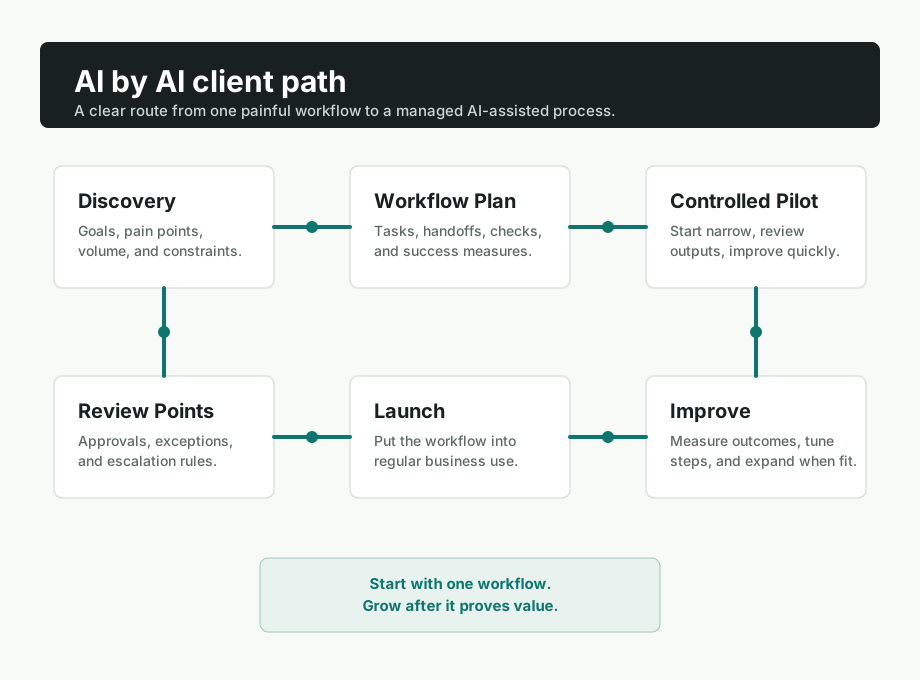
AI by AI helps owners, operators, and leaders identify work that is repetitive, expensive, slow, hard to staff, or inconsistent, then turns that work into a supervised AI-assisted process with clear handoffs and review points.
Choose the right first target: a process with enough repetition, business value, and reviewability to make AI support worthwhile.
Design the workflow so AI can prepare, analyze, draft, route, check, or operate defined tasks while your team keeps control of approvals.
Move beyond a one-time presentation. The process is documented, measured, and refined as business needs change.
Who it is for
The first market is small business because owners can quickly identify the work that hurts, approve a practical pilot, and measure whether it helps. The ambition is broader: the same model should be useful to large companies and enterprise departments that need governance, evidence, repeatability, and controlled expansion.
Offload repeatable admin, sales, reporting, research, and coordination work without asking a small team to become AI experts.
Standardize work that is currently handled differently by every person, location, department, or customer-facing role.
Apply AI to defined business functions with visible approvals, security boundaries, performance measures, and executive accountability.
Consultation deliverables
The paid consultation is designed to make a business decision possible. It should tell you whether a workflow is worth offloading, what the first controlled version should look like, what risks must be managed, and what investment would be required after the consultation.
A clear map of the work today: inputs, tools, owners, decision points, delays, exceptions, and recurring failure points.
A practical assessment of what AI should handle, what should stay human-led, and what should not be automated yet.
Defined review points, sensitive actions, data requirements, access boundaries, and escalation rules before any live workflow is proposed.
A next-step plan with scope, success measures, estimated effort, operational risks, and the decision to implement, expand, or stop.
Fit
AI by AI is strongest when the business can point to a specific workflow that already consumes time, money, attention, or customer goodwill.
First 30 days
You do not need to know how to build AI systems. You need to know which business outcome matters, what work is repetitive enough to improve, who should approve sensitive actions, and what success would look like in the first month.
A structured 60-minute Executive Workflow Alignment Session defines the business goal, current workflow, constraints, risk boundaries, and first useful target.
You receive a practical operating plan showing what AI handles, what your team reviews, what data is needed, and how outputs will be checked.
The engagement defines a controlled first version, success measures, support needs, and a decision point for whether to implement, expand, or stop.
Illustrative engagement
A local service company receives leads from email, phone notes, referral partners, and website forms. The owner knows response speed matters, but the team loses time sorting requests, drafting follow-ups, checking service fit, and preparing quotes.
Trust and control
AI by AI is positioned around supervised operations. The consultation should identify value, but it should also identify what should not be automated, what must be approved, and what evidence is needed before expansion.
No private customer records, credentials, regulated data, or sensitive operating access should be sent before a paid engagement and written data boundary are in place.
Customer-facing messages, financial decisions, legal-risk decisions, and operational changes are designed with approval points instead of blind automation.
Workflows should expand only after the first version shows useful outputs, clear supervision, and measurable value against the agreed business goal.
Paid entry point
The consultation is a two-hour paid engagement for businesses that have real work they want to move out of manual handling, but want a controlled plan before committing to implementation.
Online purchase is currently unavailable. Human advisory work starts only after paid checkout completion and scheduling confirmation.
Scheduling after payment
AI by AI does not expose open booking links to unpaid visitors. Payment comes first, then a paid-client scheduling page confirms availability through Allison Innovations Microsoft 365 before a calendar appointment is created.
The purchase path creates a one-time $500 Checkout Session for the two-hour Workflow Offload Consultation.
The scheduling page checks for a completed paid checkout record before showing next steps.
Availability should be checked against the Allison Innovations Microsoft Bookings calendar before a slot is offered or confirmed.
The client prepares one workflow, current tools, handoffs, review points, and the business outcome to improve.